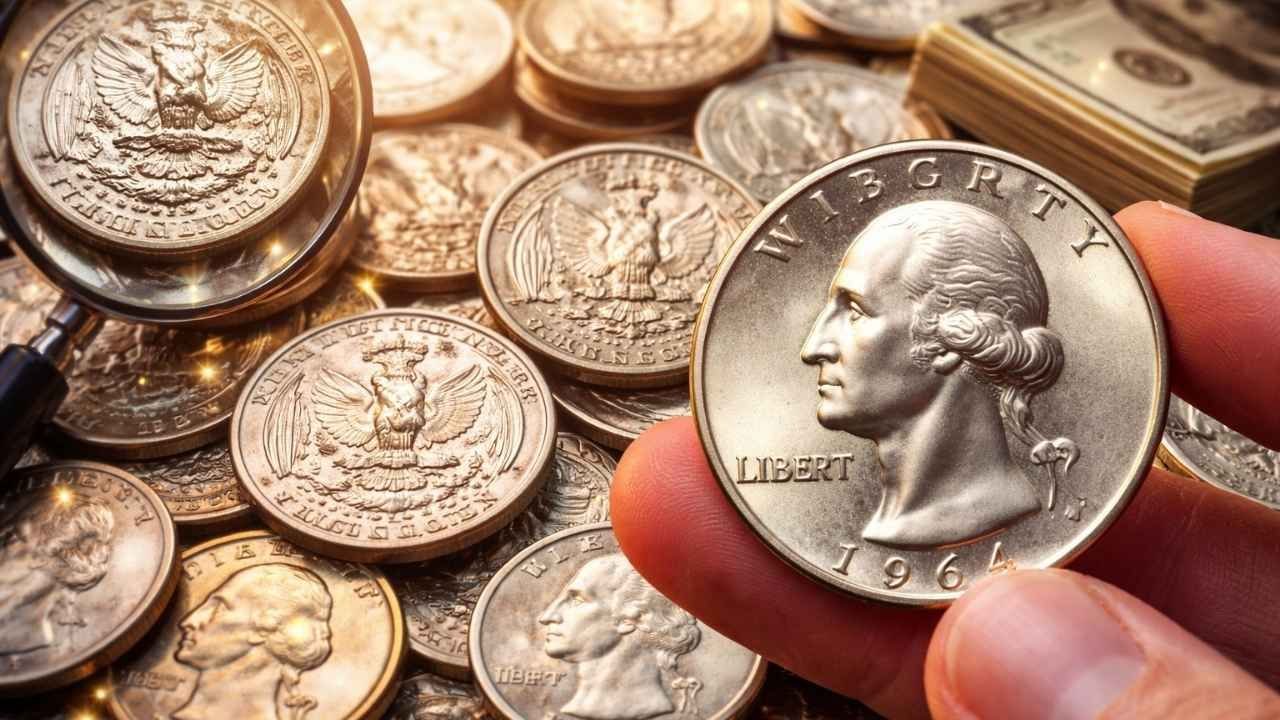
The Washington Quarter has remained a cornerstone of American currency for nearly a century. First introduced in 1932 to honor the 200th anniversary of George Washington’s birth, the coin has evolved through silver compositions, clad transitions, commemorative programs, and modern design updates.
While most quarters in circulation are still worth just 25 cents, certain dates, mint marks, and minting errors continue to command impressive premiums in 2026. For collectors and investors alike, the opportunity to discover high-value coins in everyday change remains very real.
The Legacy of the Washington Quarter
Designed by sculptor John Flanagan, the Washington Quarter replaced the Standing Liberty Quarter during the Great Depression. Originally intended as a one-year commemorative issue, the design proved so popular that it became permanent.
From 1932 to 1964, the coin was struck in 90% silver. Beginning in 1965, rising silver prices prompted the U.S. Mint to transition to a copper-nickel clad composition.
Over the decades, the quarter has also featured several reverse redesigns, including the 50 State Quarters program and the America the Beautiful Quarters series. These programs significantly expanded public interest in coin collecting and introduced millions to the hobby.
Why Some Washington Quarters Are Worth More
Not every quarter carries extra value. However, a combination of rarity, condition, composition, and mint errors can dramatically increase worth.
1. Low Mintage Years
Coins produced in smaller quantities tend to be more desirable. The 1932-D and 1932-S quarters are prime examples. Because fewer were minted during the program’s first year, surviving examples in strong condition are highly sought after.
2. Silver Composition
All quarters minted before 1965 contain 90% silver. Even worn examples carry intrinsic metal value above face value. In stronger grades, silver Washington Quarters can command substantial collector premiums.
3. Mint Errors
Modern collectors pay close attention to striking anomalies. Off-center strikes, doubled dies, wrong planchets, and die cracks can elevate an ordinary coin into a prized rarity.
One of the most famous examples remains the 2004 Wisconsin quarter error from the 50 State Quarters program, featuring an extra leaf on the corn stalk design. High-grade specimens continue to sell for hundreds or even thousands of dollars.
4. Condition and Grading
Condition plays a critical role in valuation. Coins graded Mint State (MS65 and above) often command exponential premiums compared to circulated examples. Professional grading and authentication provide confidence for high-value transactions.
Key Washington Quarters to Watch in 2026
While values fluctuate with market demand and precious metal prices, the following issues remain strong performers among collectors:
1932-D Washington Quarter
Low mintage and historical significance make this one of the most valuable regular-issue Washington Quarters. High-grade examples routinely reach four figures.
1932-S Washington Quarter
Another first-year rarity with strong long-term demand. Even moderately circulated examples can sell for several hundred dollars.
1964 Washington Quarter
As the final year of 90% silver production, 1964 quarters remain popular with both collectors and silver investors.
1970-D Proof on Silver Planchet
A rare transitional error struck on leftover silver planchets intended for other coins. Authentic examples can command several thousand dollars.
2004-D Wisconsin Extra Leaf Error
One of the most talked-about modern quarter varieties. Sharp examples remain highly collectible.
The Silver Advantage
Silver Washington Quarters continue to attract dual interest from numismatists and precious metal investors. Because each pre-1965 quarter contains approximately 0.18 troy ounces of silver, their baseline value moves with the silver market.
During periods of economic uncertainty, silver coinage often experiences increased demand. This dynamic adds another layer of appeal for financially savvy collectors building diversified tangible asset portfolios.
Modern Quarter Programs and Collectibility
Beyond traditional silver issues, modern commemorative quarters have reshaped the market. Programs like the America the Beautiful Quarters introduced limited mintages and unique reverse designs celebrating national parks and landmarks.
Special mint releases, proof coins, and low-production varieties from recent years are gaining attention in 2026. While most remain face value today, select issues in pristine condition may appreciate over time as populations shrink and collector demand increases.
How to Identify Valuable Quarters
Serious collectors know that careful inspection makes all the difference. Here’s what to focus on:
Check the Date and Mint Mark
Located on the obverse, the mint mark identifies where the coin was produced. Denver (“D”) and San Francisco (“S”) mint marks are often associated with lower mintages in certain years.
Examine the Edge
Silver quarters show a solid silver edge, while clad quarters display a visible copper stripe.
Look for Errors
Use magnification to inspect lettering, design elements, and strike alignment. Subtle doubling or irregularities can signal a valuable variety.
Assess Condition
Coins with minimal wear, strong luster, and sharp details are significantly more valuable than heavily circulated pieces.
Smart Collecting in 2026
The modern coin market blends tradition with technology. Online marketplaces, digital auctions, and real-time price tracking have made it easier than ever to evaluate and acquire rare coins.
However, the fundamentals remain unchanged: knowledge, patience, and careful research drive successful collecting.
If you are building a premium collection, consider focusing on:
- Key dates with historical significance
- High-grade silver issues
- Certified mint errors
- Low-mintage modern varieties
Diversification within your collection can balance historical depth with future growth potential.
The Ongoing Treasure Hunt
One of the most compelling aspects of collecting Washington Quarters is accessibility. Unlike rare gold coins locked away in private vaults, valuable quarters still surface in circulation, estate sales, and bank rolls.
Every transaction carries a small possibility of discovery. That sense of opportunity keeps the hobby vibrant and continually attracts new collectors.
Final Thoughts
The Washington Quarter remains more than pocket change. It is a living piece of American monetary history, bridging generations through evolving designs and enduring symbolism.
In 2026, high-priced examples are still hidden in circulation — from early silver rarities to modern mint errors. For collectors with a trained eye and a strategic mindset, the next valuable discovery could be just one coin away.