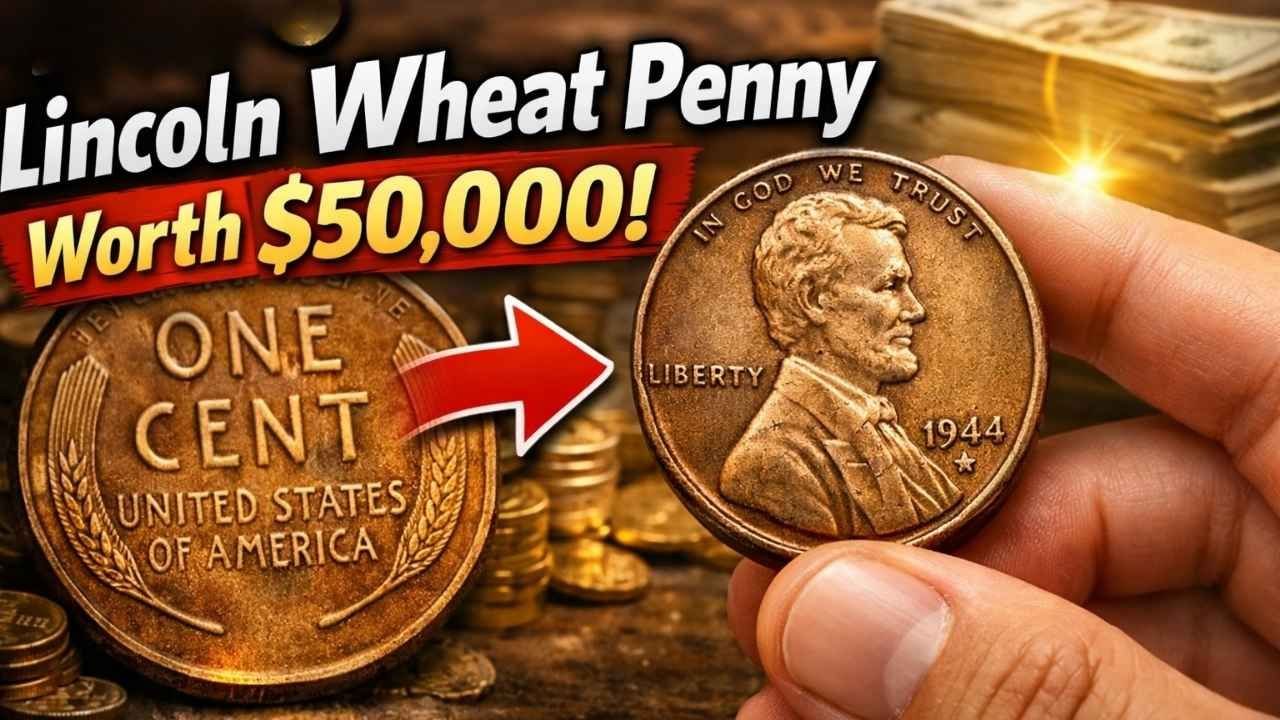
Imagine reaching into your pocket or emptying a jar of coins only to discover a rare penny that could instantly change your financial outlook. This extraordinary scenario became reality when a Lincoln Wheat Penny, valued at $50,000, was uncovered in everyday circulation. While most pennies are overlooked, collecting these seemingly ordinary coins can sometimes lead to astonishing discoveries.
The Legacy of the Lincoln Wheat Penny
First minted in 1909 to honor the 100th anniversary of Abraham Lincoln’s birth, the Lincoln Wheat Penny was revolutionary. It was the first American coin to feature a real historical figure instead of a symbolic representation. Designed by Victor David Brenner, the obverse showcases Lincoln’s profile, while the reverse features two wheat stalks, symbolizing prosperity and growth.
Produced until 1958, the Wheat Penny became a mainstay of American currency. Despite millions being minted, certain editions remain rare and highly sought after, often fetching extraordinary sums due to historical significance, limited production, or unique minting anomalies.
Why Some Pennies Are Worth a Fortune
Not every Wheat Penny carries immense value. Most remain worth just a cent. However, certain editions can be extremely valuable due to rarity, condition, or unique errors. Factors that drive value include:
- Minting errors: Coins struck incorrectly, with doubled images, missing letters, or unusual features, are prized.
- Limited production runs: Coins produced in small quantities or at specific mints often become collector highlights.
- Historical significance: Coins connected to notable events or controversial designs carry added appeal.
Collectors worldwide understand that these details transform ordinary pennies into highly coveted treasures.
Famous Rare Wheat Pennies
Some Wheat Pennies have achieved legendary status in numismatics. Notable examples include:
| Year | Mint Mark | Distinctive Feature | Approximate Value |
|---|---|---|---|
| 1909-S VDB | San Francisco | Designer’s initials VDB | $1,000–$50,000 |
| 1914-D | Denver | Low mintage | $2,000–$30,000 |
| 1922 No D | Denver | Missing mint mark | $10,000–$40,000 |
| 1931-S | San Francisco | Scarce issue | $100–$4,000 |
| 1943 Copper | Philadelphia | Wrong metal used | $100,000+ |
The penny discovered in circulation belonged to this elite group, making the find remarkable.
The Story Behind the $50,000 Penny
The specific coin uncovered was a 1909-S VDB, one of the most iconic and sought-after Wheat Pennies. Only 484,000 were minted, and many were lost, damaged, or circulated beyond recognition. The initials “VDB,” representing the designer Victor David Brenner, were initially controversial and removed from subsequent issues, increasing the rarity of original examples.
Discovering such a coin in loose change is extraordinary. Typically, collectors spend years searching through rolls, attending coin shows, and bidding at auctions to secure one. Stumbling upon it in everyday circulation underscores the unpredictability and thrill of coin collecting.
How Coins Appreciate Over Time
Rarity is the primary driver of value, but condition is equally critical. A pristine, uncirculated coin can command a price exponentially higher than a worn counterpart. Historical context adds another layer, as coins tied to significant changes in minting practices or societal milestones often attract collectors willing to pay a premium.
Professional grading services assess coins for authenticity and condition, providing certification that enhances both marketability and value.
Tips for Identifying Rare Pennies
Collectors and enthusiasts can increase their chances of uncovering valuable coins by following simple strategies:
- Check the year and mint mark carefully. Rare coins often come from specific mints or limited runs.
- Look for unusual features. Missing letters, doubled images, or design anomalies signal potential value.
- Evaluate condition. The less wear, the higher the potential worth.
- Research known rare varieties. Staying informed about historical editions improves recognition.
- Use magnification. A magnifying glass can reveal details invisible to the naked eye.
Even casual coin enthusiasts can benefit from this careful approach.
The Emotional Impact of Finding a Rare Penny
Beyond financial value, discovering a rare coin connects the finder to history. Holding a piece of currency that has survived over a century offers a tangible link to the past. Each scratch, patina, and detail tells a story of the era in which it circulated, deepening appreciation for its journey.
The Broader Significance
This discovery highlights the potential for extraordinary value hidden in ordinary objects. It reminds us to pay attention to the small details in life, as fortune can appear in the most unexpected places. A simple penny, often disregarded, can hold immense historical and financial significance.
Preserving Rare Coins
Once found, proper preservation is essential. Coins should be stored in protective holders to prevent damage from handling, humidity, or environmental exposure. Certified grading adds credibility, protects the coin, and can enhance market value.
The Future of Coin Collecting
While digital transactions are increasingly replacing cash, physical coins remain irreplaceable artifacts of history. Rare coins, including Lincoln Wheat Pennies, will continue to hold value as tangible links to the past, cherished by collectors, investors, and historians alike.
Conclusion
The discovery of a Lincoln Wheat Penny worth $50,000 in everyday change is a reminder that extraordinary treasures can exist in the most ordinary places. It illustrates the excitement, history, and potential financial rewards of coin collecting. Whether you are a seasoned numismatist or a casual observer, this story encourages vigilance and curiosity—the next valuable penny could be hiding in your pocket.