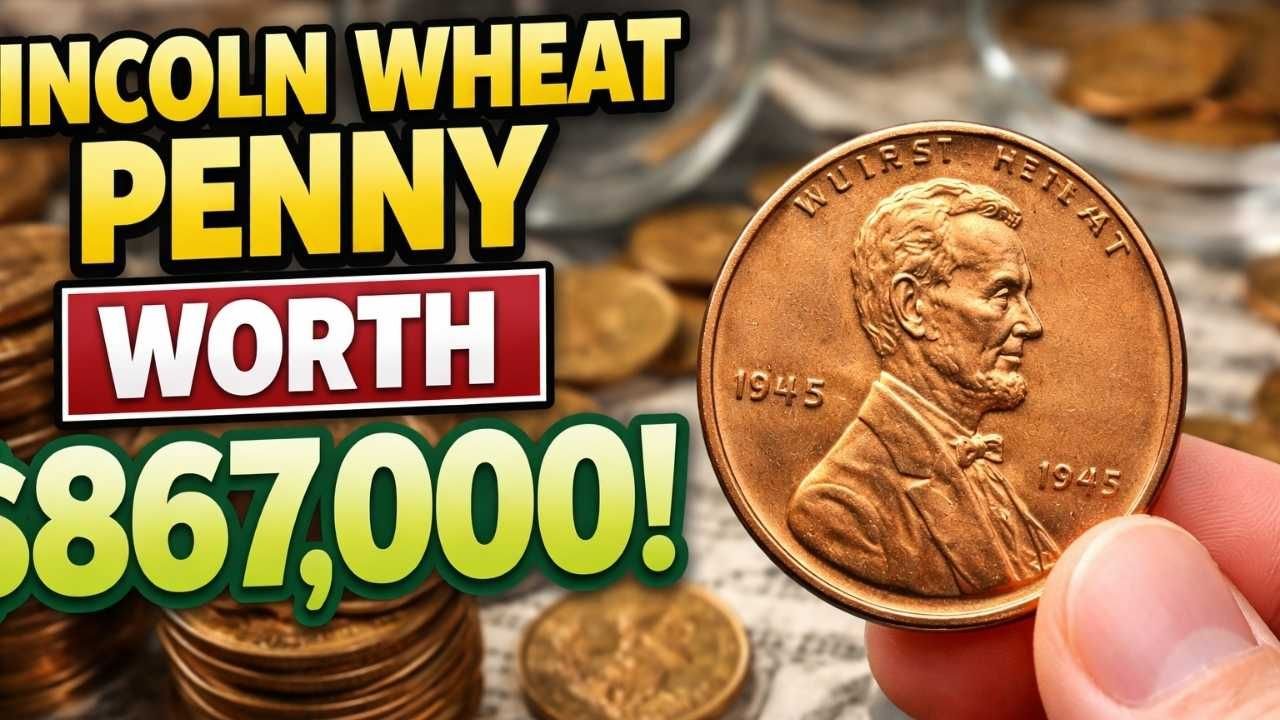
The Lincoln Wheat Penny is far more than a one-cent coin. For collectors and investors, it represents history, scarcity, and in extraordinary cases, remarkable financial upside. While millions of Wheat Pennies trade for only a few cents, select rarities have reached six- and even seven-figure auction results.
One of the most talked-about examples is the legendary 1943 copper cent, with a specimen selling for as much as $867,000. But what makes certain Wheat Pennies so valuable—and could one still be hiding in an old collection?
The Birth of an American Icon
The Lincoln cent debuted in 1909 to commemorate the 100th anniversary of Abraham Lincoln’s birth. Designed by Victor David Brenner, it marked a turning point in American coinage as the first circulating U.S. coin to feature a real historical figure.
The obverse presents Lincoln’s dignified profile, while the reverse showcases two wheat stalks surrounding the denomination. This reverse design gave rise to the popular nickname “Wheat Penny.” The coin remained in production until 1958, when it transitioned to the Lincoln Memorial reverse.
For nearly half a century, the Wheat Penny passed through the hands of everyday Americans during pivotal eras including the Great Depression and World War II. Today, that historical connection fuels its enduring appeal.
Why Some Wheat Pennies Are Worth a Fortune
Most Wheat Pennies are common. However, certain characteristics can transform a one-cent coin into a five- or six-figure asset.
Low Mintage
Coins struck in limited quantities are naturally scarce. When demand exceeds supply, prices rise—particularly in high-grade condition.
Minting Errors
Errors and varieties create uniqueness. Double dies, missing mint marks, and wrong-metal strikes are among the most sought-after anomalies.
Condition and Grading
A coin graded Mint State (MS65 or higher) can be worth exponentially more than its circulated counterpart. Professional grading enhances authenticity and market confidence.
Historical Context
Coins connected to wartime production changes or transitional periods often carry additional collector appeal.
The Legendary 1943 Copper Cent
In 1943, copper was redirected to support wartime manufacturing. The U.S. Mint produced pennies from zinc-coated steel instead. However, a small number of leftover copper planchets from 1942 were mistakenly used.
The result: the rare 1943 copper cent.
Only a handful are known to exist. Because they were never intended for circulation, these coins represent a dramatic production error. One example has sold for approximately $867,000, cementing its status among the most valuable small-denomination coins ever struck.
Collectors prize this coin not only for its rarity but also for its compelling wartime narrative.
The 1955 Double Die Obverse
Another iconic rarity is the 1955 Double Die Obverse Wheat Penny. Strong doubling is clearly visible in the date and inscriptions, making it one of the most recognizable error coins in American numismatics.
High-grade examples of this variety routinely sell for well into six figures. Unlike subtle errors that require magnification, the 1955 doubling is dramatic enough to be seen with the naked eye—part of what makes it so famous.
Other High-Value Wheat Pennies
While the 1943 copper and 1955 Double Die are headline-grabbers, several other key dates remain highly desirable.
- 1909-S VDB – A low-mintage first-year issue bearing Brenner’s initials.
- 1914-D – A scarce Denver mint coin with strong long-term demand.
- 1922 No D – A missing mint mark variety from Denver.
- 1931-S – A low-mintage issue from San Francisco.
In high-grade condition, each of these coins can command five-figure prices or more. Their combination of scarcity and historical importance ensures continued collector interest.
Common Wheat Penny Values
Not every Wheat Penny is rare—and that accessibility is part of its charm.
Here is a general overview of approximate market ranges for common dates:
1909–1919
Circulated: $0.50–$5
Uncirculated: $10–$100+
1920–1929
Circulated: $0.25–$2
Uncirculated: $5–$50+
1930–1939
Circulated: $0.10–$1
Uncirculated: $3–$30+
1940–1949
Circulated: $0.05–$0.50
Uncirculated: $2–$20+
1950–1958
Circulated: $0.05–$0.25
Uncirculated: $1–$10+
Values vary based on condition, eye appeal, and overall market demand. Even common coins in pristine condition can outperform expectations.
Grading: The Difference Between $5 and $50,000
Condition is often the single most important factor in determining value. A rare coin in heavily worn condition may be worth a fraction of the same coin in Mint State.
Professional grading services evaluate coins on a standardized 70-point scale. Authentication protects buyers from counterfeits and provides assurance in high-value transactions.
For coins potentially worth thousands, certification is essential.
Market Momentum and Investor Interest
The Wheat Penny market has benefited from increased global participation through online auctions and digital marketplaces. Greater transparency in pricing and grading has strengthened buyer confidence.
In recent years, rare coins have also gained attention as tangible alternative assets. Unlike digital investments, rare coins combine historical narrative with physical scarcity.
High-profile auction sales continue to reinforce the perception of Wheat Pennies as both collectibles and long-term stores of value.
The Thrill of Discovery
Part of the Wheat Penny’s enduring appeal lies in possibility. Unlike ultra-rare gold coins that seldom appear outside elite collections, Wheat Pennies were widely circulated.
Collectors still search inherited coin jars, estate collections, and old albums hoping to uncover a key date or rare variety. The idea that a life-changing coin could be hiding in plain sight keeps enthusiasm alive across generations.
Final Thoughts
The Lincoln Wheat Penny stands at the intersection of history, artistry, and financial opportunity. While most examples remain affordable and accessible, rare varieties such as the 1943 copper cent and 1955 Double Die demonstrate the extraordinary potential within this humble one-cent coin.
For collectors, the appeal is not solely monetary. Each Wheat Penny represents a tangible connection to America’s past—an era of industrial growth, wartime resilience, and economic transformation.
Whether you are building a serious numismatic portfolio or simply examining old coins with curiosity, the Wheat Penny offers something rare in today’s world: history you can hold, and occasionally, a hidden treasure worth far more than one cent.