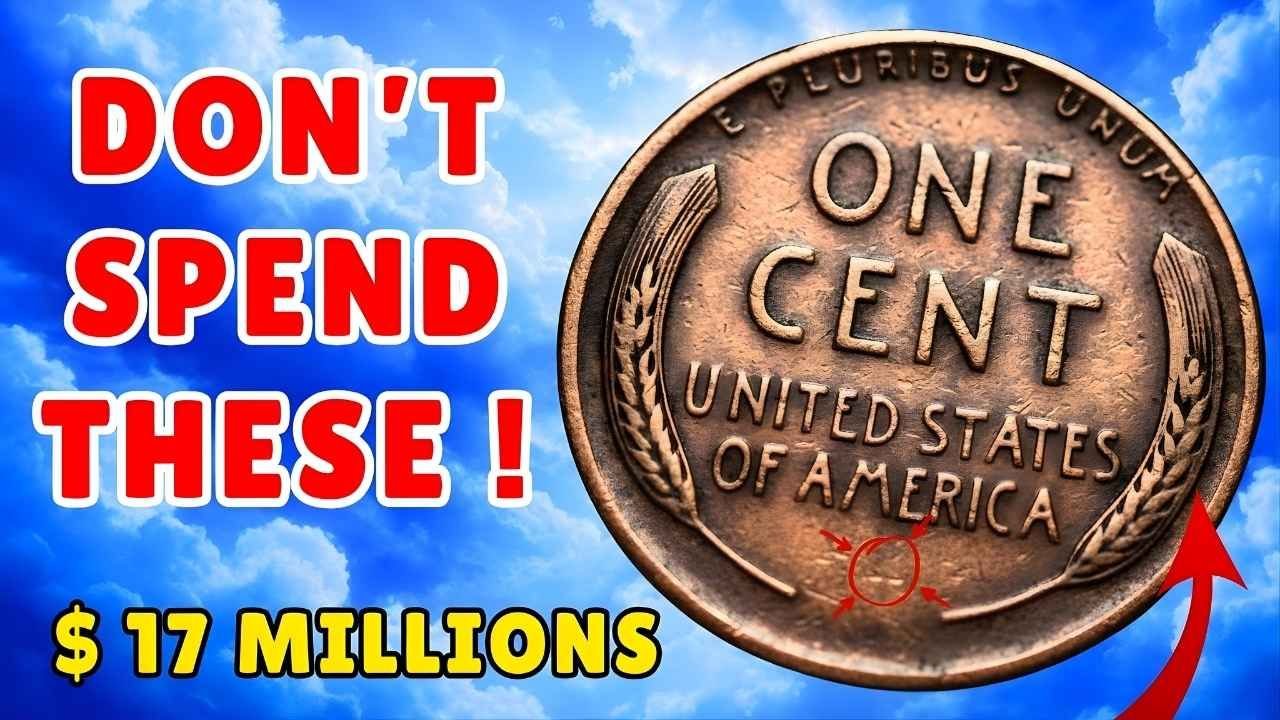
The Lincoln Wheat Penny is one of the most recognizable coins ever produced in the United States. Minted from 1909 to 1958, it carries both historic significance and surprising financial potential. While most examples are worth only a few cents, certain rare dates and error varieties can command thousands—and in exceptional cases, well into six figures.
For collectors and investors alike, the possibility that a valuable Wheat Penny could still be hiding in a jar of spare change adds an undeniable sense of excitement to the hunt.
A Historic Beginning
The Wheat Penny was introduced in 1909 to commemorate the 100th anniversary of Abraham Lincoln’s birth. Designed by Victor David Brenner, the coin marked a turning point in American coinage as the first circulating U.S. coin to feature a real historical figure.
The obverse displays Lincoln’s profile, while the reverse features two wheat stalks framing the denomination. The agricultural symbolism reflected the nation’s roots and economic foundation in the early 20th century.
During World War II, composition changes briefly altered production. In 1943, most pennies were struck in zinc-coated steel due to copper shortages. That temporary shift would later create one of the most valuable coin errors in American history.
What Makes a Wheat Penny Valuable?
Not every old penny is rare. The value of a Wheat Penny depends on a combination of critical factors.
1. Low Mintage
Coins produced in limited quantities are inherently scarcer. When collector demand meets low supply, prices rise accordingly.
2. Minting Errors
Errors such as doubled dies, missing mint marks, or wrong-metal strikes create uniqueness. These mistakes often result in some of the most valuable coins in the series.
3. Condition and Grade
Professional grading plays a major role in value. Coins graded Mint State (MS65 or higher) can sell for dramatically more than heavily circulated examples.
4. Historical Significance
Coins tied to pivotal moments—such as wartime production changes—often attract strong collector interest.
5. Market Demand
Like any collectible, pricing ultimately reflects collector enthusiasm. Popular key dates maintain consistent liquidity in the market.
Rare Wheat Pennies Worth Thousands
Several standout coins define the high end of the Wheat Penny market.
1909-S VDB Wheat Penny
The 1909-S VDB is arguably the most famous Wheat Penny. It was minted in San Francisco and features Brenner’s initials “VDB” on the reverse. Public criticism over the prominence of the initials led to their quick removal, limiting production.
With a mintage of approximately 484,000, this coin is scarce. In circulated condition, values typically range from $1,000 to $3,000. In high Mint State grades, prices can exceed $10,000, with elite examples reaching significantly higher at auction.
1914-D Wheat Penny
The 1914-D is another key date. Produced at the Denver Mint in relatively low numbers, it remains one of the most sought-after coins in the series.
Circulated examples may range from $100 to $500 depending on condition. However, high-grade coins often sell for $2,000 to $10,000 or more, with premium specimens commanding even higher results.
1922 No D (Plain) Wheat Penny
In 1922, only the Denver Mint produced pennies. Due to die wear and striking issues, a small number were released without the “D” mint mark.
These 1922 Plain cents are highly collectible. Average examples can sell for $500 to $1,000, while Mint State examples can reach $10,000 or far more depending on eye appeal and surface quality.
1931-S Wheat Penny
With a mintage of just over 866,000, the 1931-S remains a low-production issue from the Great Depression era.
In circulated grades, it may trade between $100 and $500. In uncirculated condition, values frequently rise into the several-thousand-dollar range.
1943 Copper Wheat Penny
The 1943 copper cent is one of the most legendary error coins in U.S. numismatics. While most 1943 pennies were struck in steel, a small number were accidentally minted using leftover copper planchets.
These coins are extraordinarily rare. Even lower-grade examples can command tens of thousands of dollars. High-grade specimens have sold for amounts exceeding $1 million, making this one of the most valuable small-denomination coins ever produced.
How to Identify a Valuable Wheat Penny
If you are searching through old collections or pocket change, a systematic approach helps maximize your chances.
Check the date carefully. Key years include 1909, 1914, 1922, 1931, and 1943.
Examine the mint mark. Look beneath the date for “D” (Denver) or “S” (San Francisco). Philadelphia issues typically have no mint mark.
Inspect for errors. Use magnification to look for doubling, missing letters, or unusual coloration.
Evaluate condition. Coins with strong detail, original luster, and minimal wear are significantly more valuable.
For coins that appear rare or exceptionally preserved, professional grading can confirm authenticity and maximize resale value.
The Enduring Appeal of Wheat Pennies
Beyond monetary value, Wheat Pennies carry emotional and historical weight. They circulated through eras of economic hardship, global conflict, and postwar expansion. Each coin represents a tangible link to America’s past.
For new collectors, the Wheat Penny offers an accessible starting point. For seasoned investors, key dates provide portfolio diversification within the collectibles market.
Final Thoughts
The Lincoln Wheat Penny proves that hidden wealth can sometimes be found in the smallest places. While most examples remain modestly priced, rare varieties such as the 1909-S VDB, 1914-D, 1922 No D, 1931-S, and especially the 1943 copper cent demonstrate extraordinary upside potential.
The next time you sort through old coins, take a closer look. A seemingly ordinary penny could hold exceptional historical value—and possibly a four- or even seven-figure surprise.
In the world of numismatics, opportunity often begins with a single cent.