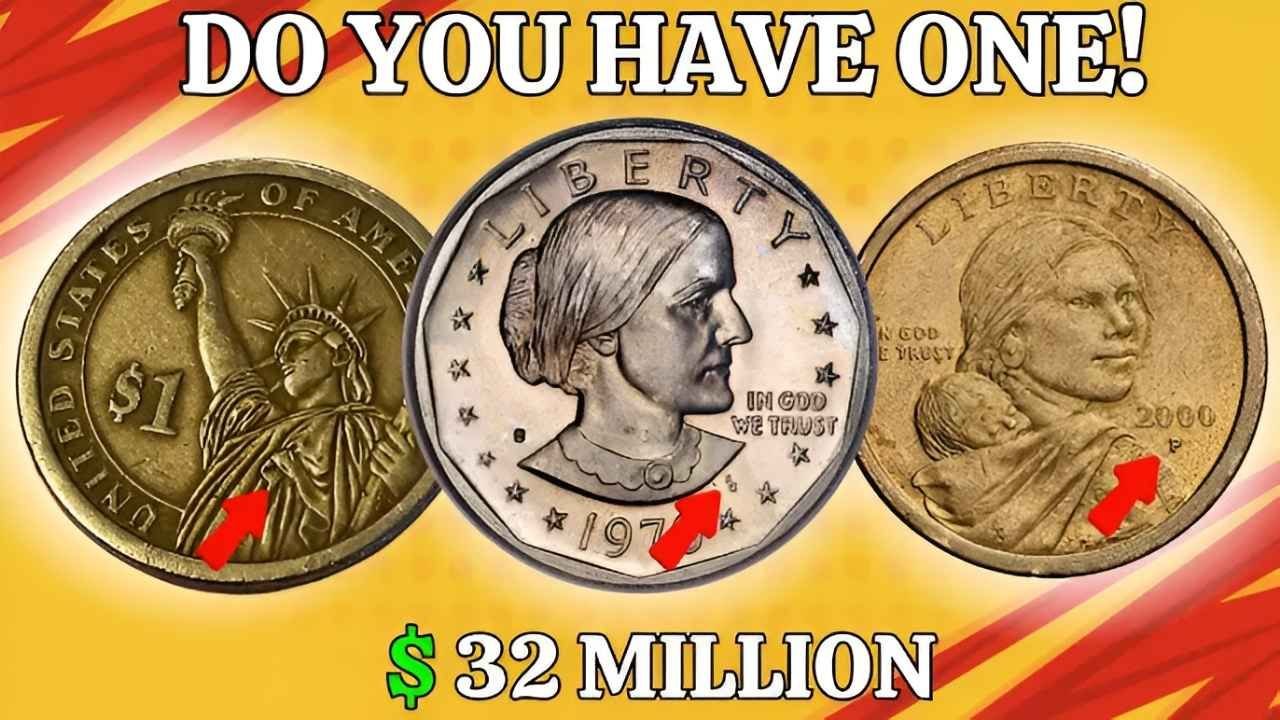
Most people treat one dollar coins as everyday currency—pocket change that gets tossed into jars, drawers, or spent without a second thought. Yet, hidden among these ordinary coins are rare varieties that can fetch thousands of dollars for collectors. Modern enough to still appear in circulation, these coins prove that treasure can be hiding in plain sight. Knowing what to look for can turn simple spare change into a lucrative find.
Why Some One Dollar Coins Gain Value
The value of a dollar coin isn’t just about age. Rarity, production errors, design variations, and limited releases all contribute to a coin’s desirability. A coin minted in smaller numbers or featuring a unique detail can quickly become a collector favorite. Condition is equally important—a coin in pristine, uncirculated condition commands far more than one that’s worn or damaged. Over time, increased collector awareness has driven up prices for coins once considered common.
The 1979 Susan B. Anthony Wide Rim Dollar
Introduced in the late 1970s, the Susan B. Anthony dollar was intended to replace the paper dollar. While its popularity was limited, one version from the first year of issue has become a highly sought-after collectible: the wide rim variety.
What Makes the Wide Rim Special
On this rare coin, the date is positioned closer to the edge than on standard issues. The difference is subtle, often overlooked by casual users, but collectors immediately recognized its rarity. During early production, the mint experimented with rim designs and quickly switched to a more conventional strike. As a result, the wide rim version was produced in significantly lower numbers.
Current Value
Today, a circulated wide rim Susan B. Anthony dollar can be worth several hundred dollars. Coins in uncirculated condition often reach into the thousands, and professionally graded specimens can command even higher prices. Once overlooked, these coins are now considered a cornerstone for modern collectors.
The 2000 Sacagawea “Cheerios” Dollar
The Sacagawea dollar, introduced in 2000, aimed to create a more popular one-dollar coin. As part of a marketing promotion, a limited number were distributed inside cereal boxes, including Cheerios. While the packaging was temporary, the real value lies in the coin’s design details.
Why the Cheerios Dollar Is Rare
This variety features enhanced tail feather detail on the eagle depicted on the reverse side. Once removed from the cereal boxes, the coins looked almost identical to standard circulation strikes, which caused many to be spent without recognition of their rarity. Over time, collectors identified these coins as a distinct and highly collectible variety.
Market Value
Even lightly circulated Cheerios Sacagawea dollars can be worth several thousand dollars. Uncirculated examples often fetch substantially higher prices, particularly when authenticated. Because counterfeits exist, professional verification is essential for serious collectors.
How to Check Your Change for Rare Coins
You don’t need expensive tools to identify valuable coins. A magnifying glass, good lighting, and careful observation are enough to spot key differences. For the Susan B. Anthony dollar, check the rim and date positioning. For Sacagawea dollars, focus on the eagle’s tail feathers. Comparing coins to reference images can confirm authenticity and help distinguish rare versions from common strikes.
Why These Coins Still Appear in Circulation
Unlike historic coins that are long out of circulation, these modern rarities can still be found in banks, vending machines, and old coin jars. Many people simply don’t expect everyday coins to hold significant value, which is exactly why these treasures continue to go unnoticed. Each year, collectors report new finds by taking a closer look at their change.
Final Thoughts
The idea that a one-dollar coin could be worth thousands of dollars is not just fantasy—it’s a reality for collectors. The 1979 Susan B. Anthony wide rim dollar and the 2000 Cheerios Sacagawea dollar demonstrate that modern coins can hold remarkable value.
Before spending your next dollar coin, take a moment to inspect it. Even a few seconds of attention could turn ordinary pocket change into an extraordinary discovery. In the world of coin collecting, knowledge truly is money.