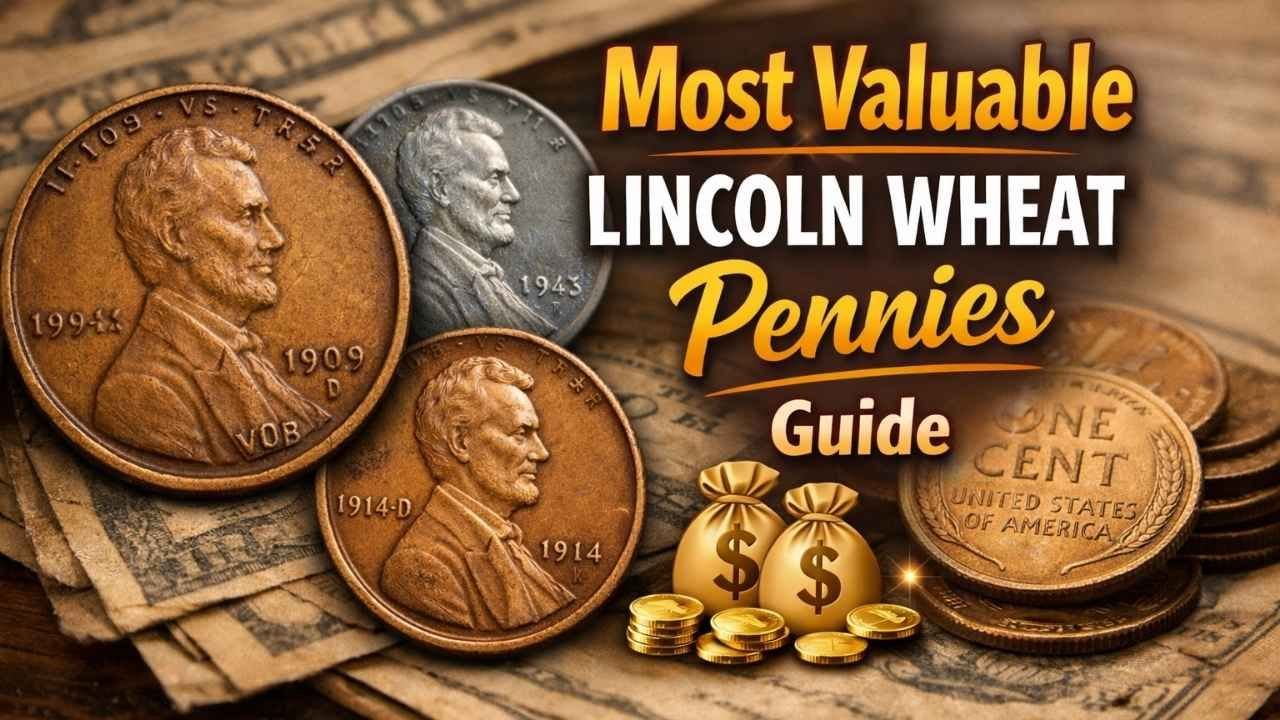
The Lincoln Wheat Penny, minted from 1909 to 1958, remains one of the most iconic and cherished coins in American numismatics. Featuring Abraham Lincoln on the obverse and wheat stalks on the reverse, these pennies have transcended their humble origins as everyday currency to become highly prized collector’s items. Over the decades, rare varieties and minting errors have elevated certain Wheat Pennies to astonishing values, with some fetching hundreds of thousands of dollars at auction.
The Historical Significance of Wheat Pennies
Introduced in 1909 to commemorate the centennial of Abraham Lincoln’s birth, the Lincoln Wheat Penny was groundbreaking. It was the first U.S. coin to feature a real person rather than a symbolic figure. The wheat stalks on the reverse symbolized prosperity and growth, reflecting America’s agricultural roots. Today, collectors value Wheat Pennies not only for their rarity but also for their historical significance, representing a tangible connection to early 20th-century America.
Factors That Determine Value
Several key elements influence a Wheat Penny’s market value:
- Year and Mint Mark: Certain years and mint locations produced fewer coins, making them rarer and more desirable.
- Condition: Coins in mint or uncirculated condition command substantially higher prices.
- Errors and Varieties: Misprints, doubled dies, off-center strikes, and unusual planchets can dramatically increase a coin’s worth.
- Collector Demand: Interest in specific varieties directly impacts auction prices.
A combination of these factors often determines whether a Wheat Penny is a modest collectible or a record-breaking treasure.
Record-Breaking Wheat Penny Worth $567,000
In 2026, a rare Lincoln Wheat Penny made headlines by selling for $567,000 at auction. This coin was a flawless example of the 1943 copper penny, one of the most famous errors in U.S. numismatic history. During World War II, pennies were intended to be struck in steel to conserve copper for the war effort. A small number of copper planchets inadvertently entered production, creating one of the rarest and most valuable Wheat Pennies ever minted.
Other Incredible Finds in 2026
While the $567,000 1943 penny stole the spotlight, several other Wheat Pennies also achieved remarkable auction results:
| Year | Mint Mark | Variety/Error | Condition | Auction Price |
|---|---|---|---|---|
| 1943 | None | Copper Planchet | MS-65 | $567,000 |
| 1922 | None | No D Mint Mark | MS-63 | $45,000 |
| 1909 | S | VDB Key Date | MS-66 | $125,000 |
| 1955 | None | Doubled Die Obverse | MS-64 | $85,000 |
| 1944 | D | Steel Planchet | MS-62 | $110,000 |
The Legendary 1909-S VDB Penny
The 1909-S VDB is one of the most sought-after Wheat Pennies. Only 484,000 were minted, and the designer’s initials, Victor David Brenner (VDB), were quickly removed after controversy. This coin remains a cornerstone of serious collections and continues to appreciate in value due to its rarity and historical significance.
The 1955 Doubled Die Obverse
The 1955 doubled die obverse is renowned for its dramatic doubling of the date and lettering, which is visible without magnification. Collectors prize this error for its visual impact and rarity, making it a consistent high-value item at auctions.
The 1922 No D Penny
In 1922, all pennies were produced at the Denver Mint, yet some coins were struck without the “D” mint mark due to worn dies. These “No D” pennies are rare and highly sought after, often selling for well above $40,000 in top grades.
The 1944 Steel Penny
Another notable wartime anomaly, the 1944 steel penny, occurred when leftover steel planchets from 1943 were mistakenly used. These coins are exceptionally rare and have fetched six-figure prices, further solidifying the appeal of error Wheat Pennies.
Why Collectors Love Wheat Pennies
Collectors are drawn to Wheat Pennies for several compelling reasons:
- Accessibility: Many Wheat Pennies are affordable, making them ideal for new collectors.
- Historical Significance: Each coin tells a story of America’s past.
- Potential Value: Even common coins can hide rare varieties worth thousands.
- Aesthetic Appeal: The classic design remains one of the most admired in U.S. coinage.
The combination of history, beauty, and investment potential makes Wheat Pennies enduringly popular.
Tips for Identifying Valuable Wheat Pennies
To spot potentially valuable Wheat Pennies:
- Check Date and Mint Mark: Look for key dates like 1909-S VDB, 1922 No D, and the 1943 copper error.
- Look for Errors: Doubling, off-center strikes, and unusual planchets indicate rarity.
- Examine Condition: Coins with minimal wear and strong luster are more valuable.
- Use Magnification: Subtle details can reveal hidden treasures that are easily missed by the naked eye.
Preserving and Storing Wheat Pennies
Proper storage is critical to maintaining a coin’s value:
- Use Coin Holders: Protect coins from scratches and environmental damage.
- Avoid Cleaning: Cleaning can diminish value by removing natural patina.
- Store in a Cool, Dry Place: Prevent tarnishing and corrosion.
- Consider Professional Grading: Certified coins often achieve higher auction prices.
The Future of Wheat Penny Collecting
As the years pass, Wheat Pennies become increasingly scarce. A new generation of collectors is discovering the thrill of hunting for rare varieties, ensuring continued demand. Record-breaking sales at auction demonstrate that Wheat Pennies remain highly relevant, not only as historical artifacts but also as valuable assets in today’s collector market.
Conclusion
The Lincoln Wheat Penny remains a symbol of American history and numismatic passion. In 2026, the $567,000 1943 copper penny showcased the incredible value hidden within these seemingly modest coins. From the legendary 1909-S VDB to the dramatic 1955 doubled die, Wheat Pennies continue to captivate collectors around the world. Whether you are a seasoned numismatist or a curious beginner, the world of Wheat Pennies offers endless opportunities for discovery, historical insight, and investment potential.
Disclaimer: Coin values fluctuate based on condition, rarity, and market demand. Always consult professional grading and appraisal services before buying or selling Lincoln Wheat Pennies.