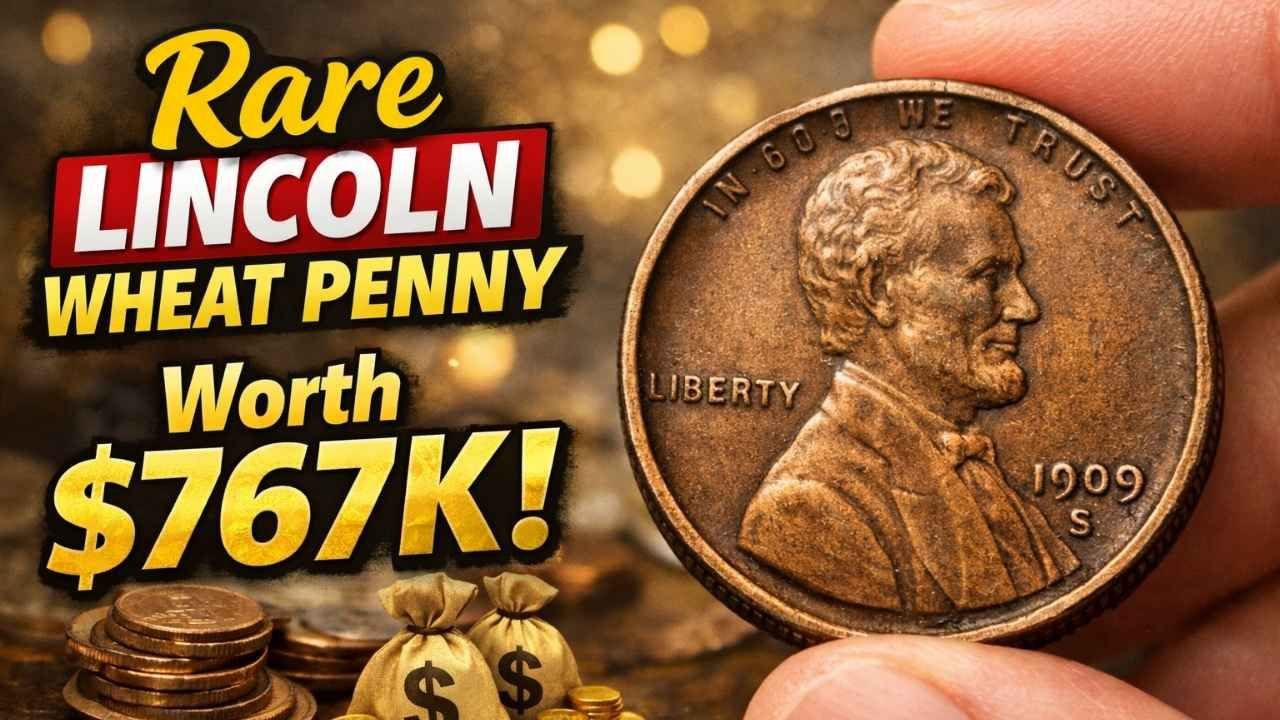
The Lincoln Wheat Penny, a humble one-cent coin, may seem ordinary to the casual eye, yet in the world of numismatics, certain pennies carry extraordinary value. Among them, the 1943 bronze Lincoln Wheat Penny has captured headlines, fetching as much as $767,000 at auction. This remarkable coin transforms an everyday copper piece into a potential fortune, proving that even the smallest coins can hold immense historical and financial significance.
The Legacy of the Lincoln Wheat Penny
Introduced in 1909 to commemorate the 100th anniversary of Abraham Lincoln’s birth, the Lincoln Wheat Penny represented a pivotal shift in U.S. coinage. For the first time, a real historical figure replaced symbolic designs like Lady Liberty. The obverse features Lincoln’s profile, while the reverse displays two wheat stalks, symbolizing prosperity and growth. Designed by Victor David Brenner, the penny originally bore his initials “VDB” on the reverse, a detail that would later define one of the series’ key rarities.
From 1909 to 1958, Lincoln Wheat Pennies were minted at three major facilities:
- Philadelphia Mint – no mint mark
- Denver Mint – “D” mint mark
- San Francisco Mint – “S” mint mark
While billions were produced, certain dates, mint marks, and errors stand out as highly collectible, drawing intense attention from serious collectors and investors alike.
The 1943 Bronze Penny: A Rare Mint Error
The star of Lincoln Wheat Penny collecting is the 1943 bronze penny. During World War II, copper was in short supply, prompting the U.S. Mint to produce pennies from zinc-coated steel. However, a few bronze planchets from 1942 were mistakenly left in the presses and struck with 1943 dies. These coins, extremely rare and historically significant, are among the most sought-after American errors.
Fewer than 20 genuine 1943 bronze pennies are believed to exist across all three mints, making them virtually priceless. One exceptionally preserved example sold for approximately $767,000, demonstrating how a simple minting oversight can generate extraordinary value.
Other Key Lincoln Wheat Penny Rarities
While the 1943 bronze penny dominates headlines, other rare Wheat Pennies also command high prices:
- 1909 S VDB: The first year of issue, featuring Brenner’s initials on the reverse. Limited production at the San Francisco Mint makes this coin highly coveted. Values can exceed six figures for high-grade specimens.
- 1955 Doubled Die Obverse: Strongly visible doubling on the date and inscriptions, particularly “LIBERTY” and “IN GOD WE TRUST.” Circulated examples sell for thousands, while mint-state coins surpass $50,000.
- 1922 No D: Pennies struck at the Denver Mint sometimes lacked the “D” mint mark due to die wear, creating a rare and desirable variety. High-grade examples can command tens of thousands of dollars.
- Other notable years: 1914 D and 1909 VDB varieties remain highly collectible, with values ranging from thousands to over $100,000 depending on condition and rarity.
Identifying a 1943 Bronze Lincoln Wheat Penny
Recognizing a 1943 bronze penny requires careful examination:
- Check the date: Ensure the coin reads 1943; altered dates are not uncommon.
- Magnet test: Steel pennies stick to a magnet; bronze pennies do not.
- Weigh the coin: Steel pennies weigh approximately 2.7 grams; bronze pennies weigh around 3.11 grams.
- Observe color: Steel appears silver-gray, while bronze has a brown or reddish tone.
- Professional authentication: High-value coins should always be graded and certified to confirm authenticity.
Factors That Influence Value
Several key factors determine a Lincoln Wheat Penny’s worth:
- Condition/Grade: Coins in mint or near-mint condition command higher premiums.
- Rarity: Low mintage or unique errors increase demand.
- Market Trends: Collector interest can shift, affecting prices over time.
- Certification: Professionally graded coins often sell for significantly more than ungraded examples.
- Historical Significance: Coins tied to major events or unique minting stories hold intangible value.
How to Examine Your Wheat Pennies at Home
Even casual collectors can start assessing their pennies with a few simple steps:
- Sort by decade: Separate coins from 1909 to 1958.
- Look for key dates: Focus on years known for rare varieties.
- Check mint marks: Look beneath the date for D or S indicators.
- Use magnification: A 10x loupe helps reveal doubling or subtle mint mark anomalies.
- Magnet test for 1943 pennies: Quickly identify potential bronze errors.
Avoid cleaning coins, as this can significantly reduce value. Maintaining their original condition preserves both historical and financial integrity.
Why Wheat Pennies Remain Popular
The Lincoln Wheat Penny continues to captivate collectors in 2026 due to:
- Its historical significance as the first regularly issued U.S. coin featuring a real person.
- Connection to pivotal events such as World Wars and the Great Depression.
- Availability of affordable varieties for beginners.
- The thrill of potentially discovering a high-value coin in everyday circulation.
Billions were minted, yet rare examples still surface in old coin rolls, estate collections, and even piggy banks, keeping the market active and engaging for collectors of all levels.
Final Thoughts
The story of the Lincoln Wheat Penny, particularly the 1943 bronze error, illustrates how ordinary coins can harbor extraordinary value. From the 1909 S VDB to the dramatic 1955 doubled die, these pennies offer collectors a blend of history, artistry, and investment potential. By understanding key dates, mint marks, and error types, collectors can unlock hidden treasures and participate in a tradition that combines financial insight with the thrill of discovery. Even if a six-figure penny remains elusive, Wheat Pennies provide a gateway into the fascinating world of numismatics and the enduring legacy of American coinage.