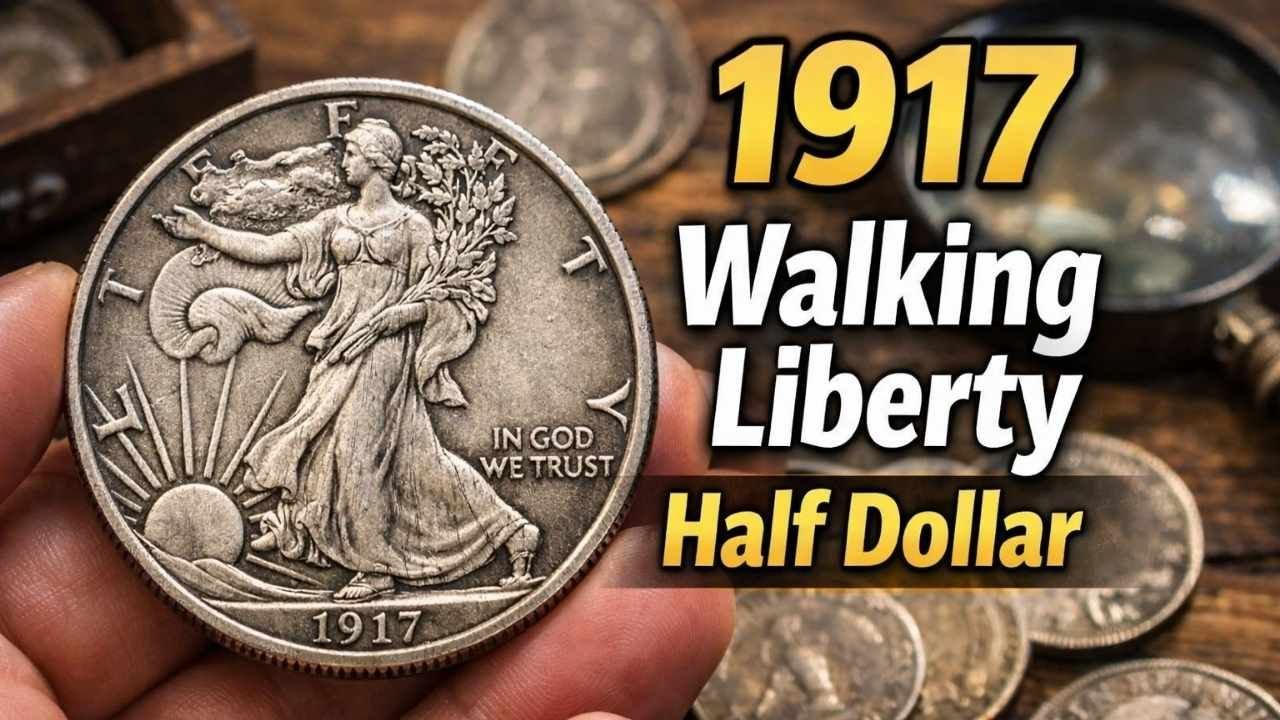
The 1917 Walking Liberty Half Dollar is not just a piece of currency—it is a symbol of American artistry, history, and collectible value. Designed by the renowned sculptor Adolph A. Weinman, this coin has captivated collectors for over a century. With its elegant design, historical context, and rare varieties, the 1917 Walking Liberty Half Dollar continues to command attention in the world of numismatics, often selling for hundreds or even thousands of dollars depending on condition and mint mark.
The Timeless Design of the Walking Liberty Half Dollar
Introduced in 1916, the Walking Liberty Half Dollar replaced the Barber Half Dollar, ushering in a new era of American coinage. Weinman’s design features Lady Liberty striding confidently toward the rising sun, draped in the American flag, and carrying branches of laurel and oak to symbolize civil and military honor. The reverse showcases a majestic eagle perched on a mountain pine, wings partially unfolded in readiness and strength.
The artistic impact of this design has endured for generations. In 1986, the U.S. Mint resurrected Weinman’s design for the American Silver Eagle bullion coin, a testament to its lasting appeal. Collectors value the Walking Liberty not only for its monetary worth but for its iconic aesthetic that captures the essence of early 20th-century America.
Historical Significance of the 1917 Issue
The year 1917 was pivotal in U.S. history, as the nation entered World War I. Coins minted during this time carry more than monetary value—they reflect a nation in transition, embodying both patriotism and artistic expression. The 1917 Walking Liberty Half Dollar captures this historical moment, making it a prized addition to any serious collection.
Mint Marks and Varieties
Collectors pay close attention to mint marks and varieties when evaluating a 1917 Walking Liberty Half Dollar. The coin was produced at three mints:
- Philadelphia (no mint mark)
- Denver (D mint mark)
- San Francisco (S mint mark)
In 1917, mint marks were initially placed on the obverse below the phrase “In God We Trust.” These obverse-mint mark varieties are particularly scarce and highly sought after. Later in the year, mint marks were relocated to the reverse below the eagle, making these versions more common but still valuable, especially in higher grades. The distinction between obverse and reverse mint mark placement adds a fascinating layer of history to the series.
Understanding Value
The value of a 1917 Walking Liberty Half Dollar is influenced by several factors:
- Mint mark location (obverse vs. reverse)
- Specific mint (Philadelphia, Denver, San Francisco)
- Condition and grade
- Rarity of the variety
A heavily circulated coin may fetch a modest sum, but rare varieties in mint state condition can command prices in the thousands. Coins with sharp details, original luster, and minimal wear are highly prized, with auction results consistently showing strong demand for exceptional examples.
Grading and Preservation
Coin grading is crucial in determining value. Collectors evaluate wear, strike quality, luster, and eye appeal. Professional grading by services such as PCGS or NGC can significantly impact a coin’s market value.
To preserve value:
- Store coins in acid-free holders or albums
- Avoid cleaning, which can damage surfaces
- Handle with care to prevent scratches
- Keep in a stable environment, avoiding humidity and temperature fluctuations
Proper preservation ensures that the 1917 Walking Liberty Half Dollar maintains its beauty and investment potential over time.
Collecting Strategies
Serious collectors often pursue complete Walking Liberty Half Dollar sets. For the 1917 issue, strategies include:
- Seeking both obverse and reverse mint mark varieties
- Focusing on higher-grade coins for long-term appreciation
- Maintaining coins in protective holders to preserve condition
Finding a rare 1917 Walking Liberty in an old coin jar or inherited collection can be a thrilling experience, offering both historical and financial rewards.
The Artistic Legacy
Weinman’s Walking Liberty design is celebrated as one of the most beautiful in U.S. coinage history. Its influence persists today, inspiring collectors and designers alike. Beyond monetary value, these coins offer a tangible connection to American history and artistic achievement, making them deeply meaningful to enthusiasts.
Everyday Discoveries
While the 1917 Walking Liberty Half Dollar is rare, it is not impossible to find. Some collectors have discovered these coins in family collections, coin jars, or estates. Checking old coins at home or in inherited collections can occasionally reveal treasures worth far more than their face value.
Conclusion
The 1917 Walking Liberty Half Dollar is a coin that combines artistry, history, and rarity. Its value is determined by mint mark, condition, and scarcity, with well-preserved obverse-mint mark examples fetching the highest prices. Owning one is not just about investment—it is about holding a piece of American history, appreciating timeless design, and connecting with the legacy of early 20th-century coinage. Whether discovered in circulation or acquired at auction, this coin remains a must-have for serious collectors seeking both historical significance and financial reward.